
Chess explained: legal moves, check, special moves and game endings
White moves first and the sides alternate. The aim is checkmate: attack the opponent’s king so no legal response removes the check. A king cannot be left in check and is not physically captured to complete the game (Articles 1 and 3).[20]
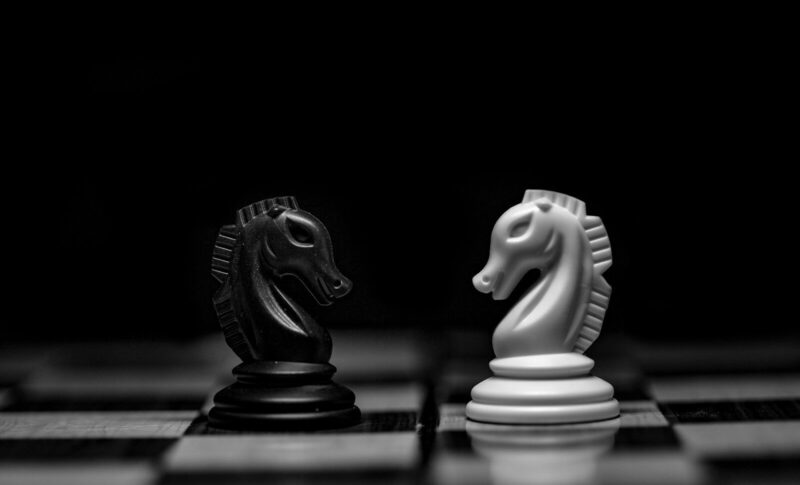
Board and movement
The near right-hand corner square is light. Rooks move along files/ranks, bishops diagonally, queens in either pattern and knights in their characteristic non-straight jump. Kings normally move one square, while pawns move forward but capture diagonally under their specific rules. Other pieces cannot pass through intervening pieces; the knight’s jump is the exception (Articles 2–3).[20]
A move is legal only if it satisfies the move rules, including king safety. A piece pinned to its king cannot legally move in a way exposing that king to attack. Check is answered by a legal king move, capture or interposition when available—not by ignoring it and racing to capture the other king (Article 3.9–3.10).[20]
Castling
Castling moves king and rook in one move with the specified placement. Rights are lost after that king or relevant rook has moved; returning it to its starting square does not restore them. Pieces cannot stand between them, and the king cannot castle out of, through or into attack. An attacked rook alone is not the same as an attacked king transit square (Article 3.8).[20]
En passant and promotion
A pawn may capture en passant only immediately after the opponent advances that pawn two squares from its original square and the capture conditions are met. Waiting an extra turn loses that opportunity (Article 3.7).[20]
On reaching the furthest rank, a pawn is exchanged as part of the move for a queen, rook, bishop or knight of its color, not restricted to previously captured pieces. The new piece acts immediately. Promotion is not limited to a queen (Article 3.7).[20]
Touch and clock procedure
With the move, intentional touching can require moving the first own piece that can legally move or capturing the first opponent piece that can legally be captured. Announce adjustment before adjusting a piece in your own time; clearly accidental contact is qualified separately (Article 4).[20]
Make a move with one hand and press the clock with that same hand. A move ending the game can be completed by that result without needing a clock press; other clock and move-completion rules still matter for illegal-move decisions (Articles 4.1 and 6.2).[20]
Winning and drawing
Checkmate wins immediately when legally produced. Stalemate, a dead position where neither side can ever checkmate by a legal sequence, and qualifying agreement produce draws. A resignation can also be a draw if the opponent cannot possibly checkmate under Article 5.1.2; do not omit that exception.[20]
Repetition and no-pawn/no-capture draw counts have claim versus automatic distinctions. A time loss also has a no-possible-checkmate exception. Those require draw-claim and clock procedures, not a blanket “three repeats ends it” shortcut.[20]
A simple ending example
If the side to move has no legal move, first ask whether its king is in check. In check: checkmate and a win for the opponent. Not in check: stalemate and a draw. A large material advantage does not convert stalemate into a win (Articles 5.1.1 and 5.2.1).[20]
Baseline: FIDE Laws effective 1 January 2023, over-the-board conventional chess. Rapid, blitz, Chess960 and accessibility provisions need their specified qualifications.[20]
Source-checked 2026-10-15 against the named official publications. This date is an editorial source check, not a credential or a new rule-effective date.
Sources
Source [20] https://handbook.fide.com/chapter/E012023 — FIDE Laws of Chess effective 1 January 2023
Governing bodies and competition scope
Read who governs chess for rulemaking, national and continental jurisdiction, event regulations and disciplinary responsibilities.