
Climbing explained: one lead attempt, repeated boulders and timed speed races
The January 2026 World Climbing general rules define attempts; its event regulations specify round structure and scoring. Mixing an older top/zone count summary with current event points can produce the wrong ranking.[93][94]
Lead
One scoring attempt per route is the general rule, with technical-incident exceptions. Event regulations give six minutes for the listed lead format. A top requires clipping the final anchor, not just touching the last hold. A failed attempt scores the last controlled scoring hold used for establishing/advancing movement; ‘+’ requires the specified advancing movement (6.1–3; 8.3; 9.1–3).[93][94]
Boulder
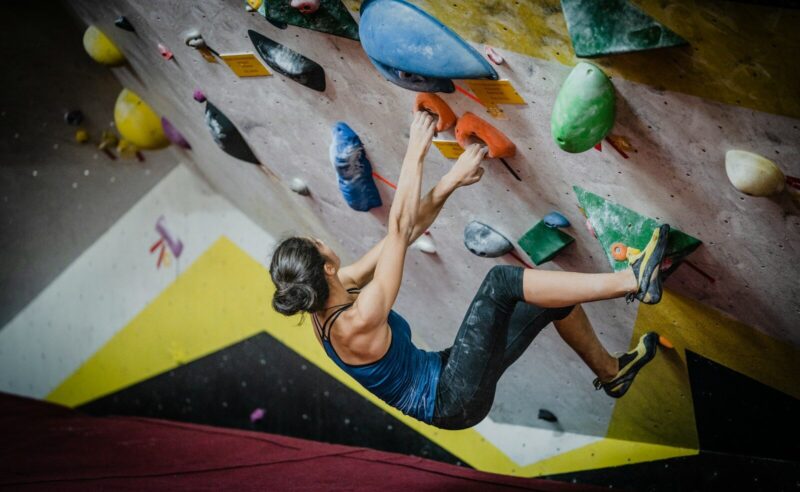
An attempt starts when leaving the ground. The athlete must validate a stable starting position using both hands/feet on the marked holds before using others. Finishing requires standing on top as allowed or matching the finish with both hands, stable and intentionally controlled before time expires (7.4–5; 8.5).[93]
Annex C scores top twenty-five or zone ten, minus the stated 0.1 attempt deductions, using the greater value. A second-attempt top is 24.9, not 34.9 by adding zone to top. Event timing/rotation controls attempts, not an unlimited practice session.[94]
Speed
Failed attempts and equipment
Falls, ground contact, out-of-bounds/safety-equipment advantage and official stoppage can end an attempt. Lead has additional clipping/Last Safe Position rules. A recognized technical incident may permit a restart, but continuing after an adverse incident can waive it (8; 11).[93]
Appeals
Written eligible appeals need the actual deadline and rule basis; event regulations limit admissible evidence. A coach’s phone recording is not automatically an official video recording. No certified judge review or safety-clearance claim.[93][94]
Source-checked 2026-10-16. Editorial source check against named publications, not certified official review or a new rule-adoption date.
Sources
Source 93 https://images.ifsc-climbing.org/ifsc/image/private/t_q_good/prd/jaq7awz9jmqwpddwnbpr.pdf — climbing-rules-jan2026
Source 94 https://images.ifsc-climbing.org/ifsc/image/private/t_q_good/prd/brsjsyh2ea4fxinl8nsa.pdf — climbing-events-jan2026
Governing bodies and competition scope
Read who governs climbing for lawmaking, competition administration, officiating and disciplinary jurisdiction.