
Judo explained: throws, holds, yuko, waza-ari and ippon
Current IJF judo can be won by a decisive throw, qualifying hold/submission, technical score advantage at time or disqualification/withdrawal as specified. This guide uses the 14 August 2026 SOR Appendix D rather than an older no-yuko summary or veteran-only modification.[78]
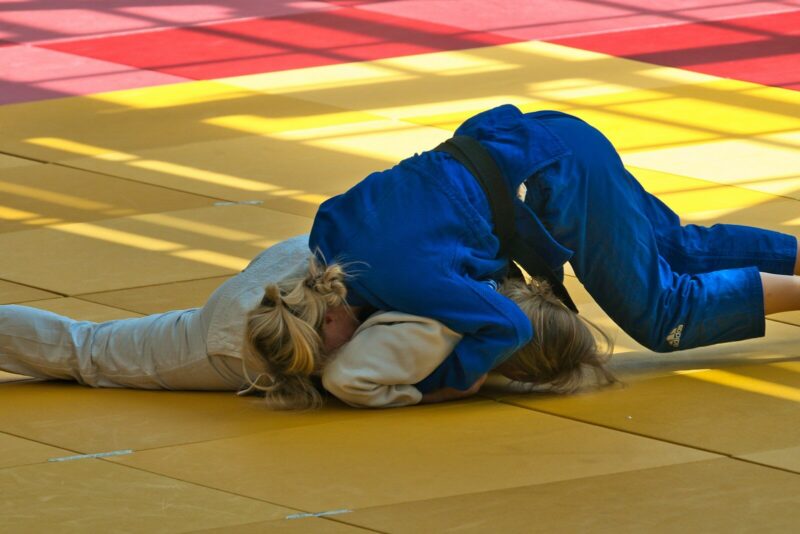
Throwing scores
Ippon requires the stated speed, force, on-the-back landing and skilled control to the end, with a recognized judo technique/variation and continuous action. Merely falling/rolling onto the back without an identifiable technique is not enough. Waza-ari and yuko have their more detailed shoulder/landing criteria (14–15).[78]
Two waza-ari make waza-ari-awasete-ippon. Yuko are counted, but however many do not add up to waza-ari. The scoreboard categories are hierarchical, not a flat arithmetic sum allowing many small scores to override a higher category (15–16).[78]
Ground wrestling
Osaekomi needs the prescribed control, back/upper-back contact and body/leg conditions. The referee’s call starts the timing; changing between qualifying holds without loss of control continues it. Merely being above the opponent is not automatically a scoring hold (17).[78]
Five to nine seconds gives yuko, ten to nineteen waza-ari, twenty ippon. A tap/recognized submission or unconsciousness in the qualifying provisions can also end; dangerous techniques and age restrictions remain relevant. This page is not instruction to apply them or wait for unconsciousness (7; 14).[78]
Stoppage and continuation
“Mate” temporarily stops; “Hajime” restarts; “Sore-made” ends. Ground action without evident progress can be stopped, but continuous valid action near/outside the boundary has specific continuation rules. A foot touching the edge alone does not settle every action (5; 10–13).[78]
Penalties
Two shido are warnings; the third becomes hansoku-make. They do not give a score to the opponent and unequal shido alone do not decide an equal-score regular contest before disqualification. Serious dangerous/anti-judo acts can have direct hansoku-make, with different later-competition eligibility by category (18).[78]
Clock and golden score
Senior/junior/cadet IJF duration is four real minutes. If technical scores are equal, golden score has no time limit or rest break; existing scores/shido carry. Any qualifying technical score can end it, including five-second yuko hold. Veteran event variations must be read separately (6; 13; veteran appendix).[78]
Officials and medical authority
The tatami referee is supported by supervisors/CARE and timing/scoring officials. Athlete safety takes priority; the medical commissioner’s/delegated doctor’s final medical authority is specified. Asking for medical intervention has rules/outcome consequences, but this must never be presented as advice to conceal symptoms (1; 20).[78]
Scores · Penalties · Officials. No certified referee review or complete national/youth comparison claimed.
Source-checked 2026-10-16 against the named publications. Editorial source check, not certified refereeing or a new rule-effective date.
Sources
Source 78 https://78884ca60822a34fb0e6-082b8fd5551e97bc65e327988b444396.ssl.cf3.rackcdn.com/up/2026/08/IJF_Sport_and_Organisation_Rul-1787430903.pdf — ijf-sor-august2026
Governing bodies and competition scope
Read who governs judo for lawmaking, competition administration, officiating and disciplinary jurisdiction.
Photo by Cesar Millan on Unsplash