
Squash singles explained: serve, walls, rally and match
Two players share the court and return the ball alternately. A return must be struck correctly before its second floor bounce and reach the front wall above the tin and below the out-line before touching the floor, either directly or after another wall (Rules 1 and 6).[16]
The serve
The racket spin chooses the first server. At a game’s start or on gaining service, the server chooses a box; while retaining service, alternate boxes. At impact at least one foot must touch the floor entirely inside that box, without touching its boundaries (Rules 5.1–5.7).[16]
The ball goes directly to the front wall between service-line and out-line, not simultaneously front and side walls, then—unless volleyed—first bounces in the opposite quarter-court without touching a line. A faulty serve loses the rally; there is no routine tennis-style second serve (Rule 5.7–5.8).[16]
Rally returns
Unlike the serve, a rally return can hit side or back walls before the front wall. It still has to reach the front wall before a floor bounce and cannot hit the tin or go out. A player may volley or play after one bounce; prolonged racket contact or more than one contact is not a correct strike (Rule 6 and Definitions).[16]
A ball hitting a player stops play and requires the specific Rule 9 decision. Do not assume it is always the striker’s point or always a let. Whether the ball was going directly to the front wall, whether the striker turned and whether it could have been a good return matter.[16]
Clear after your shot
After a reasonable follow-through, a player must make every effort to clear so the opponent has fair view, access, space for a reasonable swing and freedom to strike to any part of the front wall. The incoming player also must make every effort to play and avoid creating unnecessary contact (Rule 8).[16]
If interference occurs, the striker may stop promptly and request a let. That request includes the possibility of a stroke; the player does not have to demand a stroke separately. The Referee applies the criteria rather than automatically rewarding whoever shouts first (Rule 8.2–8.6).[16]
Three possible interference outcomes
No let: for example, no interference, no possible good return, playing on and asking later, or merely minimal interference under the rule’s conditions. Let: interference the opponent was trying to avoid where a good return could have been made. Stroke: examples include failure to make every effort to clear, a prevented swing, or interference with a winning return (Rules 8.6–8.9).[16]
These summaries must be read with the specific turning, further-attempt and front-wall provisions; not every apparently similar collision has the same ruling. Safety takes priority over attempting a dangerous shot.[16]
Scoring and breaks
Every won rally scores, and the winner serves. Games go to 11 with two clear; matches normally best of five but may be best of three. Warm-up is up to four minutes, with side change after two. The gap after warm-up is up to one minute; between games, two minutes (Rules 2, 4 and 7).[16]
Example of continuous play
A serves, wins and changes boxes. Next rally ends in a let: A serves again from that same box with no point added. B then wins: B scores and chooses either box for the new service turn. A let does not force alternation because it was not a won scoring rally (Rules 2 and 5).[16]
Edition: World Squash Singles Rules 2025, effective September 2025. Professional interpretation directives and domestic adoption dates are separate qualifications, not replacements for reading the core rule.[16][17][18]
Source-checked 2026-10-15 against the named official publications. This date is an editorial source check, not a credential or a new rule-effective date.
Sources
Source [16] https://worldsquashofficiating.com/wp-content/uploads/2025/08/World-Squash-Rules-of-Singles-Squash-2025.pdf — World Squash Singles Rules 2025
Source [17] https://worldsquashofficiating.com/psa-squash-tour-wso-directive-2025-26 — WSO PSA-specific interpretation directive 2025/26
Source [18] https://www.squashaus.com.au/news/world-squash-approves-new-rules-for-squash — Squash Australia adoption dates
Governing bodies and competition scope
Read who governs squash for rulemaking, national and continental jurisdiction, event regulations and disciplinary responsibilities.
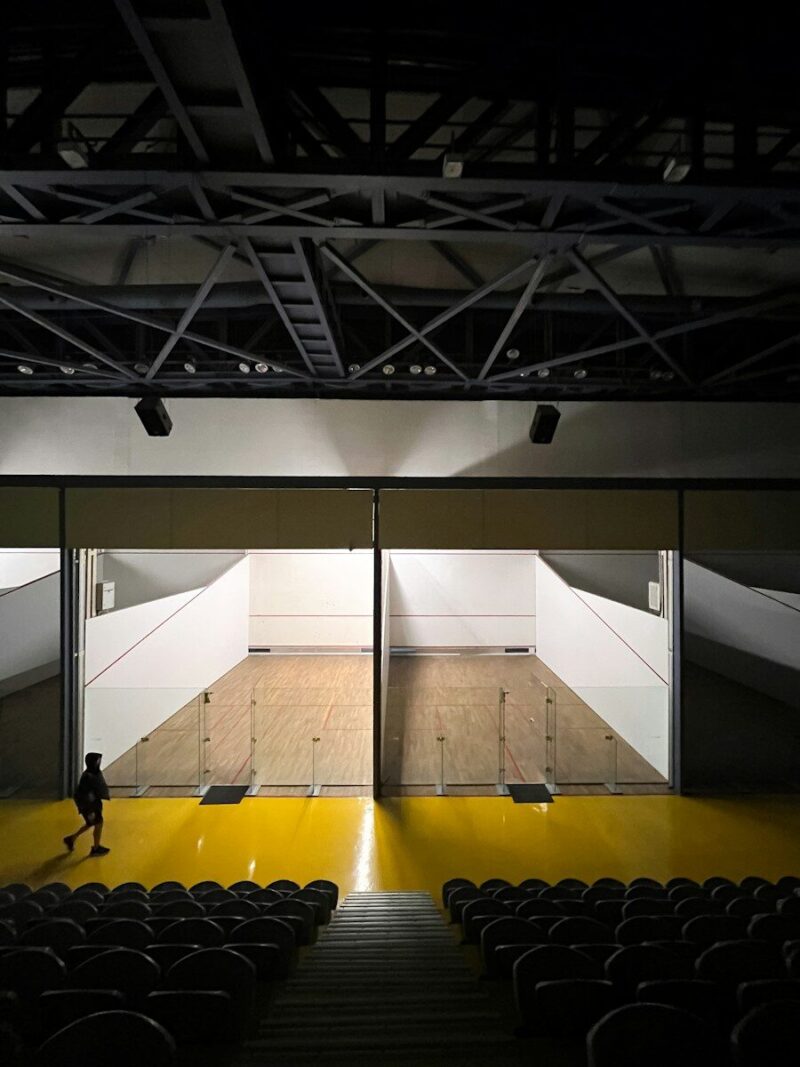
Photo by Andreas Felske on Unsplash