
WT taekwondo sparring explained: targets, points, rounds and penalties
WT kyorugi is not the same code as poomsae forms, ITF sparring or para taekwondo. This guide uses the full June 2026 WT rulebook hosted by the Danish federation, with direct WT retrieval unavailable and national-federation corroboration disclosed. Identify the actual event format and equipment before deciding a score.[79][80]
Permitted technique and target
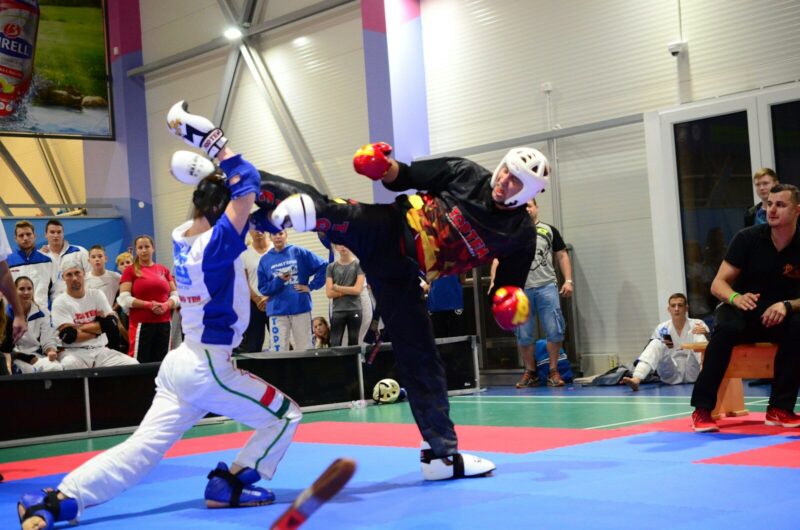
The fist technique is the straight punch with knuckles of a tightly clenched fist; foot technique uses the foot below the ankle. Trunk attacks can use fist/foot within the permitted area excluding spine. Head attacks use foot only. Head punching is not legalized by a target protector or electronic equipment (11).[79]
Valid points
Trunk punch one, trunk kick two, head kick three. A valid turning kick doubles the basic kick value: four trunk, six head. Technique/contact/impact must satisfy the actual scoring rules; a rotation without valid contact does not automatically earn a bonus (12).[79]
A gam-jeom normally awards one to the opponent. The specified last-ten-second passive-behavior case awards two but records one gam-jeom. An older five-point spinning-head summary is not this verified June 2026 rule.[79][80]
PSS and judges
Electronic Protector and Scoring Systems primarily determine contact/impact; manual inputs cover the specified punch/technical situations. Sensing-glove equipment can change the punch workflow and number of officials in an actual event. A point not appearing is not always a coach-reviewable impact error; Article 21 defines the remedy (12–13; 20–21).[79]
Best-of-three versus aggregate
In best-of-three, rounds won decide, so a huge first-round win does not bank points to defeat two later round losses. A tied round uses superiority, no fourth golden round. The book separately describes the aggregate system and its golden round; do not mix them (7; 12; 15–16).[79]
Fouls and gam-jeom
The list includes boundary/falling/delay, grabbing, prohibited leg blocking, below-waist attacks, after-break attacks, head hand strikes, knee/butting and attacking a fallen opponent. Interpretive exceptions matter: quick disengaged impact push differs from sustained/push-out/kick-preventing pushing, and unavoidable contacts are qualified (14).[79]
Five gam-jeom loses a best-of-three round, while the aggregate format’s ten-total rule is different. Intentional repeated noncompliance or serious conduct can have separate stoppage/disqualification consequences rather than a guaranteed full penalty allowance.[79]
Knockdown and health
A legal attack producing defined incapacity triggers the referee procedure; inability at eight or urgent medical need can produce RSC. This is not an instruction to continue despite concussion symptoms or a promise every downed athlete gets a tactical recovery break (17–19).[79]
Point disputes · Restarts · Officials. No certified referee review or exhaustive domestic/age-format audit claimed.
Source-checked 2026-10-16 against the named publications. Editorial source check, not certified refereeing or a new adoption date.
Sources
Source 79 https://www.taekwondo.dk/files/Dokumenter/Statisk/Dommer/Regler/Competition%20Rules%20and%20Interpretation%20from%2001.06.2026.pdf — wt-kyorugi-june2026-danish-federation-copy
Source 80 https://taekwondo-canada.com/wp-content/uploads/2026/09/2026-09-New-Rules-Kyorugi-WT.pdf — taekwondo-canada-june2026-application
Governing bodies and competition scope
Read who governs taekwondo for lawmaking, competition administration, officiating and disciplinary jurisdiction.